

Optimized Occupancy Management With Flexible Restriction Options
Improved Forecasting Accuracy
Make informed decisions based on real-time occupancy data and scope of demand.
Use historical data and market trends to set effective restrictions, improving the ability to forecast demand and optimize pricing.

Automated Rule Application
Apply restrictions automatically across multiple channels, saving time and ensuring consistency.
Dynamic Control Over Room Availability
Adjust room availability in real-time based on demand, and avoid overbooking or underbooking.
Customizable Restriction Settings
Create and apply custom restrictions based on specific needs, like high season, special events, etc.
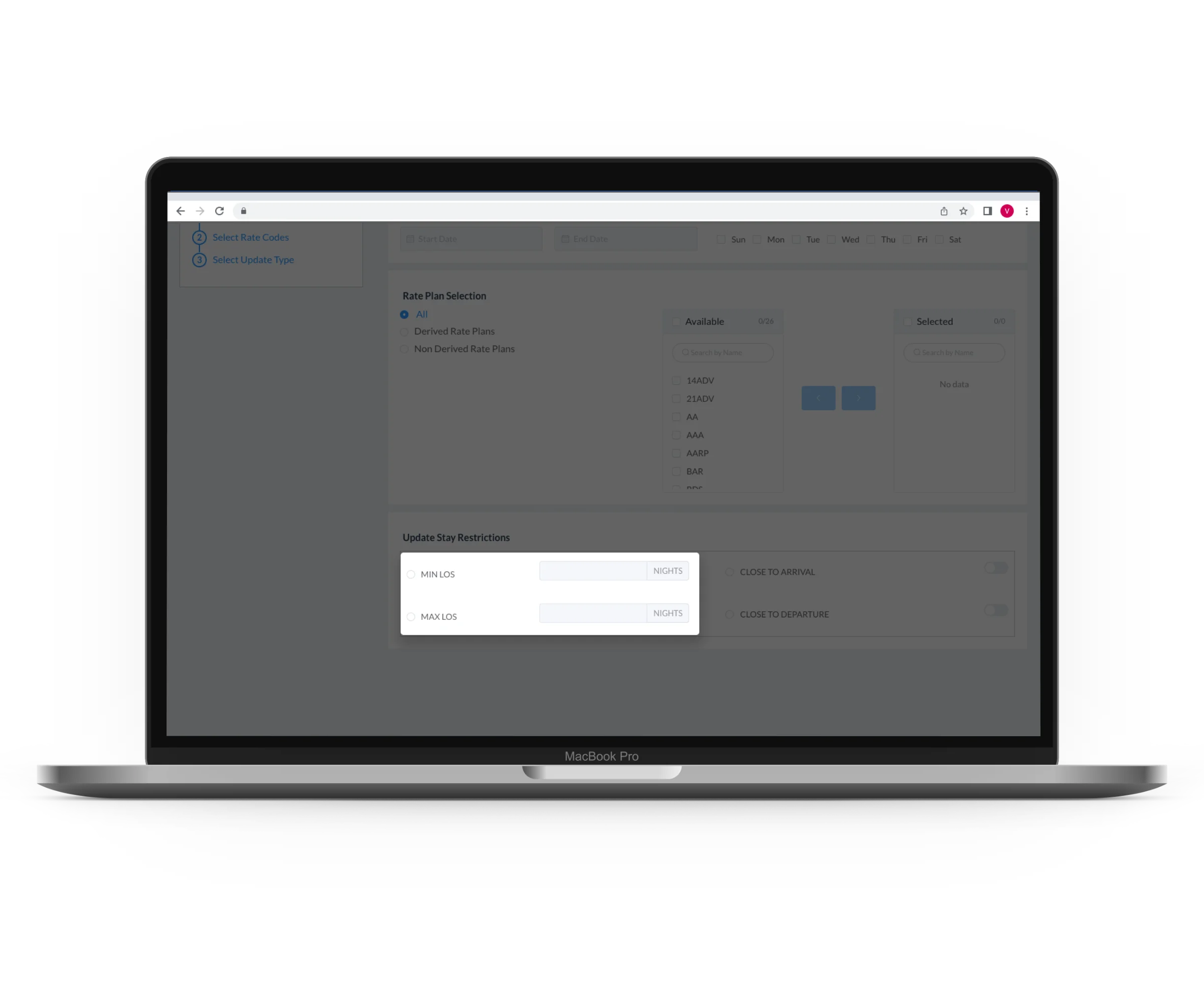
Min/Max LOS Restrictions
Set Min/Max Length of Stay (LOS) Restrictions to safeguard high-demand days and promote longer stays. Use these restrictions to offer discounts for extended bookings, encouraging longer stays while maintaining control over room availability. Additionally, enforce these LOS fences automatically for stays post check-in, ensuring consistent pricing and occupancy management throughout the guest's stay.
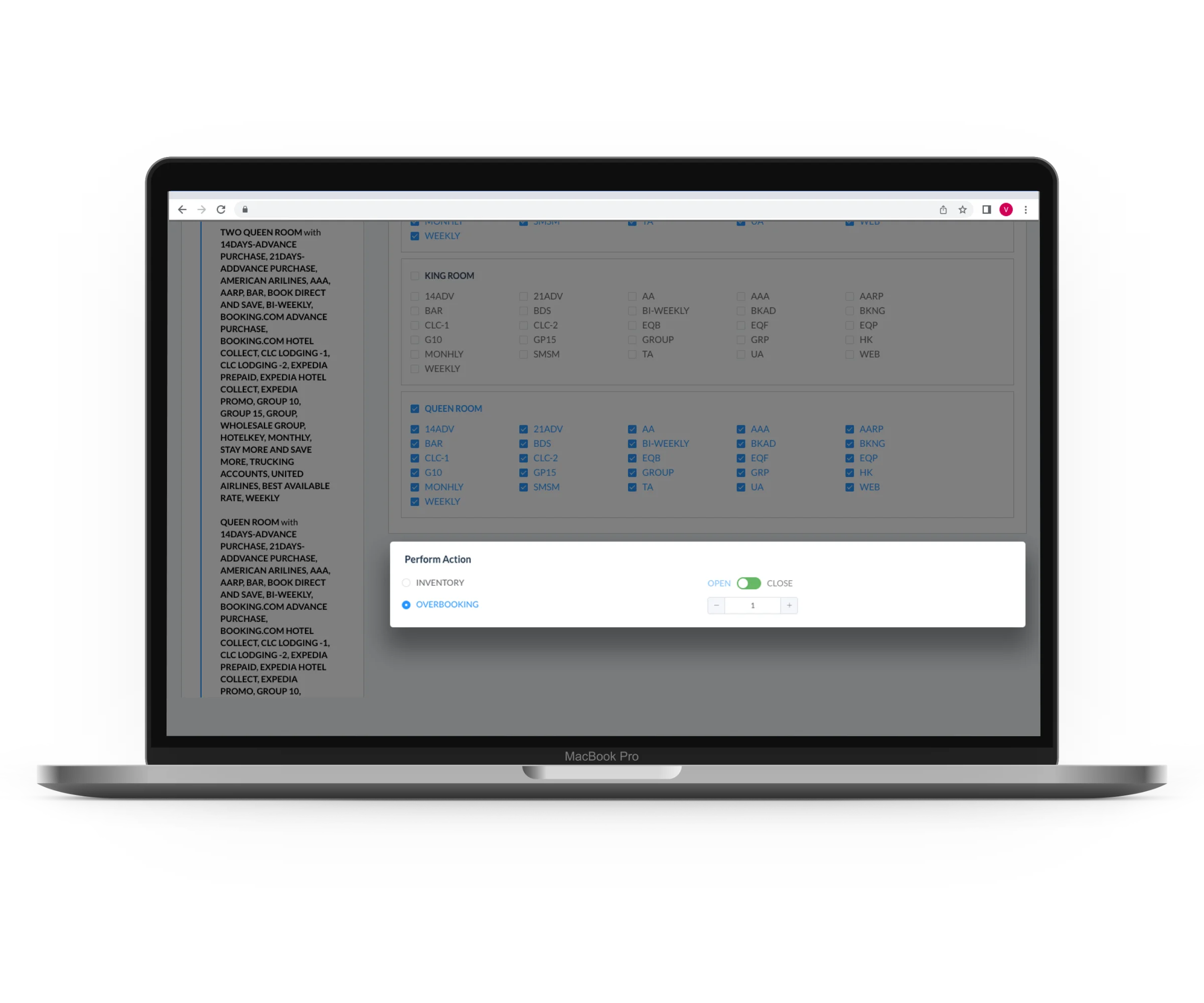
Overbooking Counters
Analyze historical cancellations and no-shows to optimize the overbooking counters. Set counters at the product level—rate plan, room type, and date—to maximize the chances of selling rooms while minimizing the risk of overbooking, ensuring to make the most out of your available inventory.
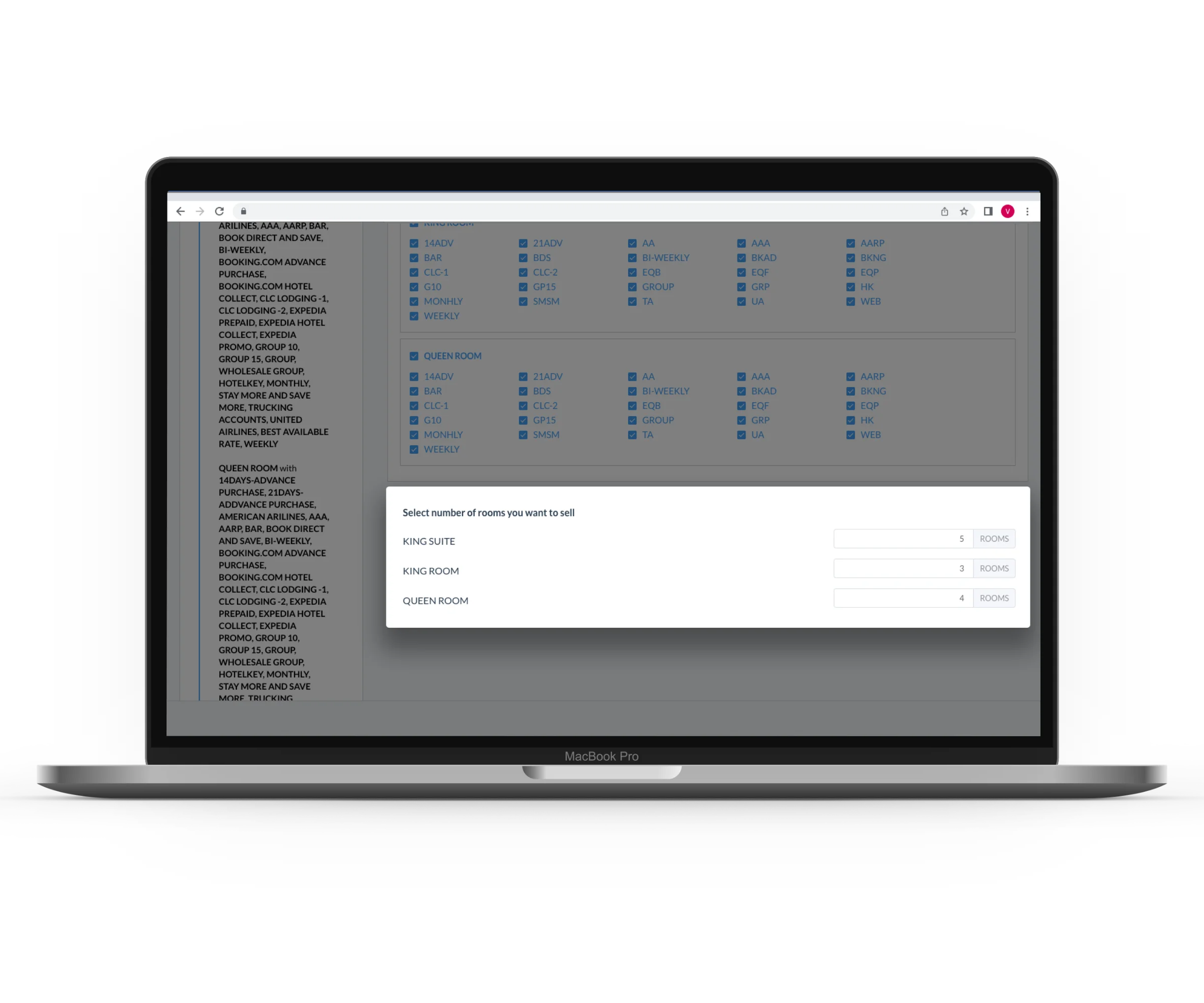
Rooms to Sell Counters
Use historical data and market trends to set effective restrictions, improving the ability to forecast demand and optimize pricing.
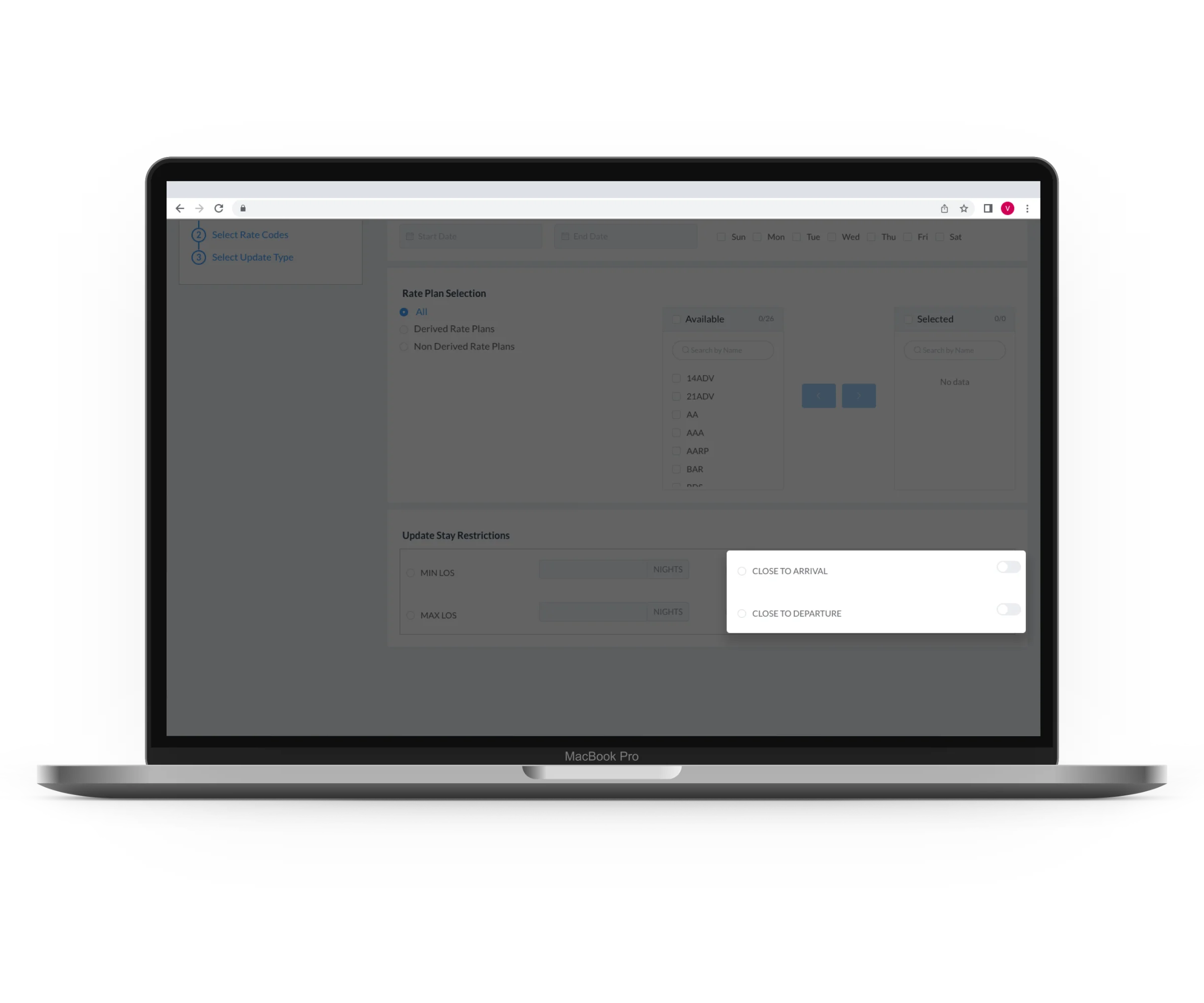
CTA, CTD, & Close Restrictions
Safeguard your special events and high-demand dates with Close-to-Arrival (CTA), Close-to-Departure (CTD), and Close Restrictions. These restrictions can be applied at the product level—rate plan, room type, and date—offering complete flexibility to protect the inventory and optimize occupancy.
Curious to Learn more? These Questions Might Help!
HotelKey's rate management system provides real-time price adjustments based on market demand and booking trends. For example, if there's a sudden surge in bookings or cancellations, hoteliers can quickly increase or decrease rates to reflect this change, preventing revenue loss during peak periods.
A standout feature is its seamless integration with channel managers, ensuring that rates are updated across all OTAs simultaneously. This eliminates the risk of pricing discrepancies and overbookings. HotelKey also offers advanced forecasting tools that allow hoteliers to predict demand more accurately, optimizing pricing.
Yes, HotelKey supports complex pricing structures such as length-of-stay pricing, where rates vary based on how long a guest stays. It also allows for the creation of different rate plans for corporate clients, groups, or event bookings, all of which can be dynamically adjusted based on real-time data.
24*7 Customer Support
Don't let glitches disrupt a great guest experience. HotelKey offers 24/7 customer support to provide expert help anytime, anywhere.
Contact SupportHigh Customer Satisfaction Score
Be confident in selecting a PMS trusted by hoteliers worldwide. Our high customer satisfaction scores are a testament to the positive impact HotelKey PMS can have on hotel operations.
Check out what our client says about us