
Blogs
HotelKey: The Future of Hotel Technology Isn't Just Cloud. It's the Ability to Deploy 100+ Hotels a Week.
For years, one assumption has shaped enterprise hotel technology projects: large-scale Property Management System (PMS) deployments are inherently slow, expensive, and disruptive.
Hotel companies have accepted months, or even years, of phased rollouts, armies of consultants traveling from property to property, operational disruptions, and extensive staff retraining as the unavoidable cost of modernization.
That assumption is rapidly becoming outdated.
The real competitive advantage is no longer simply choosing a cloud PMS. It is choosing a platform that can be deployed at enterprise scale with speed, consistency, and minimal disruption. Leading hotel organizations are increasingly asking a different question:
Can our technology partner execute hundreds, or even thousands, of deployments using a repeatable, standardized methodology without slowing down our business?
The answer lies as much in the deployment model as it does in the technology itself.
Industrializing the Deployment Framework
A modern cloud deployment framework combines centralized program governance, standardized rollout methodologies, fast onboarding programs, remote implementation teams, data migration validation, integration readiness, cutover planning, structured training, and post-live Hypercare into a repeatable process that can be executed consistently across every property.
Instead of treating every hotel as a unique implementation project, successful cloud providers industrialize deployment, creating a predictable playbook that can scale from dozens to hundreds of hotels without sacrificing quality.
The business impact is significant:
Faster realization of ROI
Lower implementation costs
Reduced operational disruption
Standardized user adoption
Predictable rollout schedules
Enterprise-wide governance and visibility
The Enterprise Deployment Gap: Why Timing is Everything
This need for a robust, high-speed rollout mechanism isn't theoretical; it is actively reshaping the enterprise hospitality landscape today.
Major rollouts are actively being paused across the industry because platforms simply do not possess the automated rollout mechanisms required to scale without causing severe operational friction. While these providers stall for weeks to recalibrate their deployment pipelines and attempt to fix marketplace limitations, hotel owners are left waiting in limbo.
For forward-thinking hotel operators, HotelKey is always a suitable platform for seamless onboarding.
HotelKey’s deployment engine is fully operational 24/7/365. You do not have to wait out another solution provider’s technical backlog or delay your modernization goals. HotelKey gives you the immediate capability to upgrade your portfolio right now, backed by a proven, high-velocity mechanism that other providers are still trying to build.
Seamless Migration: The Easiest Move You Will Ever Make
Data migration is often the greatest hurdle to modernization, but it shouldn’t be. While requirements vary by brand, adhering to established data governance ensures a smooth and consistent transition. Because the fastest cloud deployments begin with effortless data transfer, HotelKey automates the movement of critical information, such as guest reservations and billing data, from other PMS systems. This enables organizations to migrate faster, reduce implementation risk, and keep rollout schedules perfectly on track. Ultimately, it transforms one of the most complex implementation tasks into a simple, automated process with minimal operational disruption.
Zero Downtime: Operational Continuity After Go-Live
Perhaps even more important is what happens after deployment. Historically, hotel technology has conditioned operators to expect maintenance windows, scheduled outages, and nightly operational interruptions. Software upgrades often required planned downtime, while Night Audit processes forced front desk teams to pause operations until end-of-day processing was complete.
True cloud architecture changes that paradigm.
Modern platforms should deliver continuous software innovation without taking hotels offline.
Transparent Releases: New updates should be deployed seamlessly, without disrupting guest service.
Background Night Audit: Night Audit should become a background business process, not an operational bottleneck, allowing front desk teams to continue checking guests in and out while end-of-day processing completes.
That is the operational standard today's hotel companies should expect.
The HotelKey Advantage
At HotelKey, these principles have been embedded into both our technology and our deployment methodology. Today, more than 18,000 hotels operate on the HotelKey cloud platform, giving us one of the industry's largest cloud deployment footprints.
That experience has enabled us to refine a highly standardized implementation framework capable of supporting enterprise rollouts at extraordinary scale, including onboarding 100 or more properties per week, with the majority of implementation activities delivered entirely remotely.
For hotel executives, the conversation has fundamentally shifted. Success is no longer measured by whether a PMS is cloud-based. It is measured by:
How quickly an organization can modernize.
How consistently it can deploy across an entire portfolio.
How little disruption it creates for hotel operations.
How continuously the platform evolves without downtime.
The next generation of hospitality technology will be defined not by software alone, but by the ability to transform an enterprise with speed, confidence, and operational continuity. The future belongs to platforms that make large-scale digital transformation feel routine.
Ready to Upgrade Your Independent Hotel or an Enterprise Portfolio?
Don't let deployment delays hold your business back. Contact the HotelKey team today to discover how quickly we can transition your properties to the industry's leading cloud PMS.
JUL 14, 2026
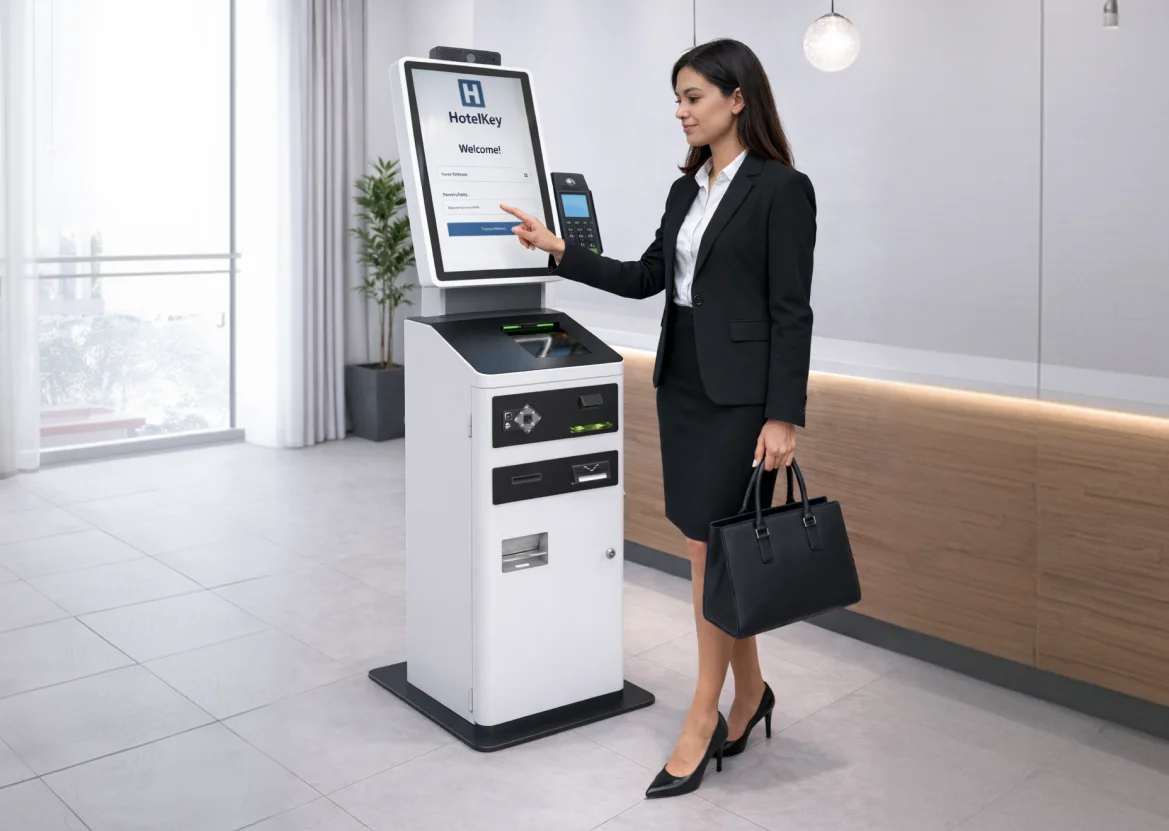
The Rise of Hotel Kiosks: A 2026 Industry Trend Report
MAY 21, 2026
BWH® Hotels Unveils AutoClerk® Atlas, a Next-Generation Property Management System Powered by HotelKey
OCT 09, 2025

9 Hotel Myths Busted Your Ultimate Guide to a Hassle-Free Stay
Traveling and staying in hotels can be an exciting adventure, but there are many misconceptions and myths surrounding the hospitality industry that need to be addressed. To ensure a pleasant and informed stay, both guests and hotels need to have a clear understanding of what to expect. In this interactive blog, we'll debunk nine common hospitality myths from both the guest's and hotel's perspective.
Myth 1: Hotels Make Huge Profits from Room Service
Guest Perspective: Many of us have a notion that hotels make enormous profits through room service. However, the reality is that the margins can be surprisingly thin. The costs of staffing, food preparation, and other operational overhead often leave hotels with minimal profits.
Hotel Perspective: Hotels primarily offer room service as a convenience to guests, not as a major source of income. The intention is to enhance your experience and provide you with a wide range of dining options right in the comfort of your room.
Myth 2: All Hotels Have the Same Amenities
Guest Perspective: A common assumption is that all hotels offer identical amenities. But, in fact, different hotels cater to various clientele, which leads to significant variations in the services and facilities they provide.
Hotel Perspective: Hotels design their amenities based on their target audience. Whether you're looking for a luxurious spa, a family-friendly pool, or a budget-friendly option, it's essential to research and choose a hotel that aligns with your preferences.
Myth 3: Booking Directly with the Hotel Is Always Cheaper
Guest Perspective: Some travelers believe that booking directly with the hotel guarantees the lowest price. While this can be true in some cases, online travel agencies and comparison websites often offer competitive deals, loyalty rewards, and other perks.
Hotel Perspective: Hotels certainly value direct bookings, but they also partner with various booking channels to reach a broader audience. As a result, pricing can vary depending on the channel, so guests need to explore all available options.
Myth 4: Housekeeping Can Clean Any Mess
Guest Perspective: It's easy to assume that housekeeping can clean up any mess, no matter how severe. However, they are constrained by time and resources.
Hotel Perspective: While housekeeping teams work tirelessly, guests should also take responsibility for their cleanliness and respect the limits of what can reasonably be cleaned during a single stay.
Myth 5: You Can Always Get an Upgrade If You Complain
Guest Perspective: Some travelers believe that complaining at the front desk guarantees a free upgrade. However, upgrades are subject to availability and the hotel's policies.
Hotel Perspective: Hotels do their best to accommodate upgrade requests, but it's important to understand that upgrades are not guaranteed. Polite communication is key, and the hotel staff will appreciate your understanding of their limitations.
Myth 6: Hotels Waste Unused Toiletries
Guest Perspective: There's a misconception that hotels discard unused toiletries after every guest checks out. However, many hotels have sustainability programs in place and donate these items to charity or recycle them.
Hotel Perspective: Hotels are increasingly conscious of environmental sustainability. As a result, many have implemented initiatives to minimize waste and support local communities through responsible disposal and donation of unused toiletries.
Myth 7: Wi-Fi Is Always Free
Guest Perspective: While many hotels offer free Wi-Fi, some travelers assume it's always complimentary. In reality, some hotels may charge for premium or high-speed internet access.
Hotel Perspective: Providing reliable Wi-Fi involves costs for the hotel, including equipment, maintenance, and bandwidth. As such, while some hotels offer it as an inclusive amenity, others may provide it as an additional service.
Myth 8: All Staff Are Tipped Generously
Guest Perspective: It's a common myth that all hotel staff receive generous tips. In truth, tipping should be based on the quality of service provided, and not all staff members expect or rely on gratuities.
Hotel Perspective: While tips are undoubtedly appreciated by hotel staff, it's important for guests to consider the level of service received when deciding on gratuities. Tipping should be fair and reflect the quality of the service provided.
Myth 9: Hotels Enjoy Overbooking
Guest Perspective: There's a misconception that hotels intentionally overbook rooms to maximize revenue. In reality, it's a strategy to account for no-shows and cancellations, with careful management.
Hotel Perspective: Overbooking is a delicate balancing act for hotels. The goal is to ensure all rooms are filled while minimizing inconveniences to guests. Hotels take no-shows and reservations seriously, and their aim is to provide a comfortable and reliable experience for all guests.
Summing it up…
Understanding the reality behind these common hospitality myths benefits both guests and hotels. Open communication, mutual respect, and informed choices lead to a more enjoyable and satisfying hotel experience. Travelers should research, be considerate, and appreciate the hard work that goes into providing excellent hospitality. Hotels, on the other hand, should be transparent, offer great service, and continue their efforts to make each guest's stay exceptional.
To enhance the guest experience and streamline hotel operations, modern property management systems (PMS) like HotelKey come to the forefront. HotelKey offers a range of benefits that can address many of the challenges and misconceptions discussed in this blog.
Efficiency: HotelKey can help hotels manage room service more efficiently, ensuring that guests receive prompt and top-notch service without unnecessary overhead costs.
Customization: Guests can find hotels that cater to their specific preferences and needs, as HotelKey's integrated PMS allows hotels to tailor their services to different clientele.
Direct Booking: HotelKey facilitates direct bookings, making it easier for guests to access the best rates, loyalty rewards, and offers without intermediaries.
Cleanliness: Through HotelKey's integrated housekeeping management features, hotels can maintain high standards of cleanliness, ensuring that guests enjoy a pristine environment.
Transparency: HotelKey enables hotels to communicate clearly with guests regarding upgrade policies, ensuring transparency and a better understanding of available options.
Sustainability: Hotels using HotelKey can implement responsible practices, such as recycling unused toiletries, showcasing their commitment to environmental benefits.
Service Excellence: HotelKey helps hotel staff deliver outstanding service, making guests' experiences so enjoyable that they are more likely to provide generous tips to deserving team members.
Optimized Reservations: With HotelKey's reservation management, hotels can minimize overbooking risks and ensure a smooth, reliable experience for all guests.
In conclusion: While understanding these common hospitality myths and realities can improve the experience for both guests and hotels, adopting modern property management systems like HotelKey can significantly enhance the entire guest journey. By embracing innovative technology and practices, the hospitality industry can continue to evolve and offer memorable experiences that exceed the expectations of every traveler.
Posted on AUG 12, 2025
Seamless Synergy The Unbeatable Advantages of Merging Your PMS and POS Software
Let's dive into the world of Property Management System (PMS) and Point of Sale (POS) software!
Picture this: Your hotel and restaurant are bustling with guests and customers. You're juggling reservations, check-ins, orders, and everything in between. While dealing with multiple systems at a time, your guest's order from the restaurant is accidentally entered in the PMS dashboard, and the order from the room is updated in the POS. So now the burger that was supposed to be delivered to table no. 4 is reaching a guest who was waiting for that pepperoni pizza in his room.
Chaotic right? Bad reputation. Arguments. Negative reviews. Not the ideal situation, really.
Imagine if all of these tasks seamlessly flowed together from a single, integrated system. Your attendants in the restaurant are seamlessly attending guests, while the orders from the room are directly updated in the PMS system. No confusion. No chaos. That's the magic of bringing your PMS and POS software together…
Merging your Property Management System (PMS) and Point of Sale (POS) software can offer several benefits to your hotel and restaurant management.
In this blog, we're going to explore the perks of this integration, why it's a game-changer, and how it can revolutionize your hotel operations.
Streamlined Operations: The Power of Unity
Let's start with the obvious advantage: streamlined operations. Imagine having a single dashboard that handles room reservations, guest check-ins, and all types of purchases. No more double data entry, no more frantic cross-referencing between systems. With your PMS and POS in sync, you're looking at a seamless flow of information. When a guest checks in, the system automatically recognizes them across the board. They reserve a room, head to the spa, and dine at your restaurant. With everything seamlessly integrated, you are making your experience smoother and more enjoyable.
Guest Information: The Heart of Personalization
Now, let's talk about the heart of customer service: personalized experiences. When your PMS and POS systems merge, they create a comprehensive guest profile. This profile holds valuable information about their stay, preferences, and spending history. Imagine a returning guest walking into your establishment. Your staff can instantly access their preferences, like a preferred room type or a favorite meal. It's like welcoming an old friend with open arms and their favorite drink already on the way.
Efficient Check-out: Bid Farewell to Hassles
We've all been there—the check-out line that seems to stretch for miles. But with integrated systems, checking out becomes a breezy affair. Guests can settle their bills for both accommodation and additional services in one smooth transaction. There is no need to wait in two different lines or worry about separate payments. It's fast, efficient, and it ensures that your guests leave with smiles on their faces.
Inventory Management: Keeping Stock in Check
For businesses that blend services with retail products, inventory management is a whole other ballgame. Merging your PMS and POS software means real-time updates on your inventory. When a guest buys that exquisite piece of artwork from your hotel's boutique, the inventory count is immediately adjusted. This real-time sync prevents you from overselling products you no longer have and helps in avoiding those dreaded stockouts.
Data Insights: The Crystal Ball of Business
Data is gold in today's business and technology landscape. With your PMS and POS systems merged, you're sitting on a goldmine. You'll have a wealth of data about guest behavior, preferences, and spending patterns. This information is a treasure trove for shaping marketing strategies, pricing models, and even the introduction of new services. Imagine knowing which spa package is the most popular among your guests and creating a limited-time offer that gets them buzzing with excitement.
Upselling Made Artful: The Personal Touch
Let's talk upselling. It's an art, really. With integrated systems, you can take it to the next level. Your staff can access detailed guest profiles and tailor their upselling suggestions. If a guest is a frequent spa-goer, imagine the delight on their face when your staff recommends a special discounted spa package during their stay. It's not just upselling; it's providing an experience that resonates.
Customer Experience: Where Magic Happens
At its core, it is all about the customer experience. Merging hotel PMS and POS software enhances this experience in numerous ways. Imagine a guest with dietary restrictions noted in the PMS. When they dine at your restaurant, the staff is already informed, ensuring a fine and delightful dining experience. It's those little details that turn a good stay into a memorable one.
Real-time Updates: No More Guesswork
Ever had a situation where the room a guest booked was suddenly unavailable due to a mix-up in the systems? It's a headache for both you and the guest. Integrated systems eliminate this kind of confusion. Any changes made to a reservation or bill are reflected in real-time across both PMS and POS platforms. No more guessing games, and therefore no more disappointed guests.
Efficient Reporting: Insights at Your Fingertips
Reporting is the backbone of understanding your business's health. Merged hotel software makes generating reports a walk in the park. You'll have comprehensive insights into sales, occupancy rates, revenue streams, and other key performance indicators. These reports are your compass, guiding you towards making an informed decision.
Reduced Training Time: Simplicity Wins
Introducing a new system often means training your staff all over again. However, with an integrated PMS and POS, the learning curve is smoother. Training staff on a single platform is generally quicker and more efficient than teaching them to navigate two separate systems. This also reduces the chances of errors caused by confusion between multiple interfaces.
Cost Savings: A Wise Investment
While there might be initial costs associated with merging systems, the long-term benefits can translate into cost savings. Optimized operations, reduced errors, and efficient inventory management can all lead to a healthier bottom line. Plus, the improved customer experience often translates into repeat business and positive word-of-mouth, which are invaluable assets.
Choosing the Right Fit: A Word of Caution
As exciting as merging PMS and POS systems sounds, remember that success hinges on choosing the right software solutions. Compatibility, ease of integration, and ongoing support are critical factors. A seamless integration can be a game-changer, while a poorly executed one can lead to frustration and confusion. HotelKey’s all-in-one property management system provides a user-intuitive property management platform with efficient workflows giving you the time and the capability to focus on guest interaction. From reservations, checkouts, and insightful reporting, Hotelkey has everything your hotel needs for success. Experience excellence in every aspect of your operations.
In Conclusion:
Merging your PMS and POS software isn't just a trend; it's a competitive edge. It's about offering an exceptional guest experience, optimizing your operations, and making data-driven decisions that propel your business forward. It's the future of efficient, customer-centric hospitality and retail. So, if you're ready to take your business to the next level, merging your PMS and POS software might just be your ticket to success.
Posted on AUG 05, 2025

HotelKey Partners with Inntopia to Power Seamless Guest Data Integration and Smarter Marketing
HotelKey is excited to announce our integration with Inntopia, a leading CRM, CDP, and marketing automation provider for resorts and hospitality brands. This powerful collaboration enables properties using HotelKey’s cloud-based Property Management System (PMS) to unify their guest data with information from a wide range of other systems, including point-of-sale, activities, dining, surveys, and marketing platforms, to create a single, comprehensive view of every guest.
By syncing HotelKey’s rich operational data directly into the Inntopia Marketing Cloud, hotels and resorts gain deeper insight into guest behavior, preferences, and engagement across their entire property. This integration not only enhances the accuracy and depth of guest profiles but also unlocks new opportunities for automated and personalized marketing.
“Partnering with Inntopia unlocks exciting possibilities for our clients,” said Aditya Thyagarajan, Co-Founder and President of HotelKey.“By combining HotelKey’s real-time operational data with Inntopia’s powerful marketing tools, hotels and resorts can deliver more personalized guest experiences and drive smarter, data-driven marketing decisions. This integration is a big step forward in helping our customers turn insights into action.”
The integration allows HotelKey clients to streamline their marketing operations by automating outreach based on real-time behaviors. For instance, if a guest books a room but hasn’t scheduled spa services or activities, a personalized follow-up campaign can be triggered, increasing upsell opportunities while enhancing the overall guest experience.
Hotels and resorts will also benefit from cross-system reporting and data analytics, enabling marketing teams to understand which offers are resonating, which guest segments are underperforming, and where new revenue opportunities exist.
This partnership underscores HotelKey’s commitment to building a smart, connected ecosystem that empowers hoteliers to operate more efficiently and engage guests more meaningfully, all while maximizing performance across departments.
HotelKey clients can now easily activate the Inntopia integration by contacting their account manager. If you're not yet using HotelKey but want to see how this integration can streamline your operations and elevate your guest engagement, our team would love to connect. Visit HotelKey.com to get started.
Inntopia: Inntopia Marketing Cloud is a hospitality CRM + CDP that enables resorts to merge guest data from every source into a single guest database and perfectly engage with guests for upsell, guest service, and marketing outreach/automation. Founded in 2004, the platform is trusted by some of the world’s best resorts and destinations including Snowbird, Big Cedar, Palmetto Dunes Oceanfront Resort, The Grand America Hotel, and Jackson Hole Mountain Resort.
Posted on JUl 29, 2025

Adopting Mindful Spending: 14 Ways to Reduce Your Hotel Expenses
With rising inflation all over the world, hotel operational costs are simultaneously increasing. Therefore, managing cash inflow and outflow is crucial to keep your hotel business in profit.
Every hotel, whether small or large scale, needs effective revenue management to prevent unnecessary expenses.
It is important that you have a firm grasp of how your hotel makes money. Reducing operational expenses is a needed goal for any hotel to improve profitability and efficiency.
Here are 14 effective ways to reduce operational expenses to a bare minimum:
1. Technology AdoptionInvesting in the right Property Management System (PMS) is the first step towards reducing hotel expenses.
Property Management Systems streamline operations by seamlessly integrating reservations, check-ins, and housekeeping tasks, while automating processes like billing and guest communication, enhancing overall efficiency and guest satisfaction.
Having hospitality software that smoothly manages all your guest operations, not only increases customer satisfaction but also cuts costs.
Hotel software enhances guest satisfaction by enabling personalized service through guest preferences tracking, efficient room assignment, and timely service delivery, leading to a seamless and tailored experience that exceeds expectations.
2. Inventory ManagementInventory management is not an easy task. The room reservations need to be constantly updated in real-time. Even an hour's delay can cause overbooking and this becomes especially difficult because bookings come through various channels.
Hotel booking software is a tool that directly assigns guests to rooms when they are making their reservation and the software also automatically updates the inventory as soon as the booking happens.
Use technology to track and manage inventory more effectively, and void overstocking and wastage by monitoring consumption patterns and adjusting procurement accordingly. By using the right hotel software, your property will be saved.
3. Energy EfficiencyImplement energy-saving measures such as the installation of LED lighting, smart thermostats, and energy-efficient appliances that can help in reducing expenses.
Encourage guests and staff to conserve energy by turning off lights, electronics, and appliances when not in use. Digital registration & electronic folios reduce unnecessary internet consumption for your hotel.
4. Water ConservationInstall low-flow faucets, showerheads, and toilets to reduce water usage. Implement a linen and towel reuse program to minimize laundry demand.Regularly check for leaks and repair them promptly.
5. Waste ManagementImplement a comprehensive waste reduction and recycling program. Minimize single-use items and opt for reusable alternatives. Properly segregate and dispose of waste to reduce disposal costs.
6. Staff TrainingCross-train employees to handle multiple tasks, be efficient, while reducing errors and wastage along the way.
Smart housekeeping software ensures that your staff is never inundated with guest requests, reducing misunderstandings and unnecessary costs.
7. Maintenance PlanningRegularly maintain and inspect equipment, facilities, and systems to prevent breakdowns and costly repairs. Implement preventive maintenance schedules to extend the lifespan of assets.
8. Outsource ServicesConsider outsourcing non-core services such as laundry, landscaping, and some housekeeping tasks. Outsourcing can sometimes be more cost effective than hiring and managing in-house staff for these functions.
9. Sustainable PracticesEmbrace sustainable practices, such as sourcing local and organic products for your restaurant, implementing eco-friendly amenities, and adopting green certifications that can attract environmentally conscious guests.
10. Effective MarketingDevelop targeted marketing strategies to attract more guests during off-peak seasons. Special promotions, loyalty programs, and partnerships with local attractions can help increase occupancy and revenue.
11.Flexible StaffingUse a combination of full-time, part-time, and temporary staff to adjust to fluctuating demand.
Say goodbye to hiring a concierge for the 24/7 shift. With a cloud-based PMS,digital keys and contactless check-in procedures allow guests to check-in at any time they need, creating space for your staff to focus on the needs at hand.
12.Menu OptimizationEvaluate your restaurant menu to focus on popular, cost-effective dishes. Minimize food waste through portion control and proper storage.
13. Local PartnershipsCollaborate with local businesses for mutually beneficial partnerships, such as providing discounts to guests in exchange for referrals.
14.Regular Cost AnalysisMonitor and analyze your operational costs regularly to identify areas where further savings can be achieved.
Remember, every hotel's situation is unique, so it's important to analyze your specific circumstances and tailor these strategies to fit your needs best.
Regularly review your expenses, analyze data, and engage your staff to identify additional cost savings and operational improvement opportunities.
In the quest to save money and boost profits in the hotel business, HotelKey is your secret weapon. It's like having a smart assistant that simplifies tasks, keeps guests happy, and reduces costs. In a world where every dollar counts, HotelKey is your key to success in the hotel industry.
Posted on September 15, 2023
HotelKey CRS Part 2 : Rate Plan Administration
This article is the second part of the series of articles we’ll publish to go over HotelKey CRS functionality.
In lodging, a product is a combination of room type and rate plan that makes-up the guest reservation with the property. Last week, we covered the room type management. This week, we’ll cover BAR and discount rate plans that derive from the BAR as the amount on/off or percentage on/off. Next week, we’ll cover the fixed amount rate plans.
Rate management is as much an art as science. The rate of a specific room must justify the value based on the room attributes, property location, and market demand for the given date.The Best Available Rate (BAR) rate concept is one of the oldest concepts in Revenue Management to communicate the value of the stay to the guest. The amount of the daily BAR is either set by a revenue manager or determined by the RMS system that uses a set of attributes such as occupancy, last year’s data, weather, booking pace and seasonality among many other factors to suggest an optimal rate.
As per our internal statistics, on average, our HotelKey clients have 10+ discount rate plans that derive from the daily BAR rate. These rates are usually for online channels, stay or date-based discounts and membership programs (i.e. AAA).
Due to the nature of discount rate pricing, we believe the most optimal approach to derived rates is to be able to set the rate amount on/off OR percentage on/off for each date. It also enables the mix-and-match of derivation types (percentage or amount) for the same rate plan for each date. As a result, with HotelKey CRS, the revenue managers have full flexibility to allow discount rates to be changed for busy days or specific seasons to maximize the revenue opportunities.
For example, the revenue manager may set AAA to be 5% off BAR in the summer season, 10% off BAR in winter, $5 off BAR on Christmas Eve, $0 off BAR New Year Eve, etc.
In all of this, we also made it extremely simple to control these discount offsets. The user has a single-click screen to set the discount amount off/on or percentage off/on and the Rate engine automatically recalculates the discount values for those rate plans shopping API calls after the change
For more information, please visit this link for the how-to guide on the BAR and discount rate plans.
Posted on May 13, 2020
HotelKey CRS Part 1: Room Type Management
This article is the first part of the series of articles we’ll publish to go overHotelKey CRS functionality
In lodging, a product is a combination of room type and rate plan that makes-up the guest reservation with the property. In this article, we’ll cover the room type portion of this product.
Every property is different and unique. A room type must be distinguished from another room type by one or more attributes such as the size of a room (i.e. sq.ft), outside view from inside the room (i.e. ocean view), amenities within the room (i.e. sofa), etc. Moreover, in the US and many other countries, all properties are required to support accessible rooms (i.e. Roll-in shower) and these accessibility attributes also drive the creation of separate room types.
In the last few decades, the properties and their revenue managers have spent a lot of time to figure out the room types to maximize product differentiation and price them accordingly. However, this has also resulted in a situation where a 100-room property would have 20 or so room types. This becomes a pricing nightmare as the product requires that every rate plan has a price by room type. Asking the revenue managers to eliminate room types would be counterproductive to the revenue. For example, a standard room with an ocean view can provide an extra $20 per night (vs. standard room) that can provide a meaningful increase in ADR and RevPAR of the property.
When we looked at this problem, we wanted to solve this in a natural way. And we came up with a room type hierarchy approach. Let's take an example. A property sells five room types: Standard Room, Accessible Standard Room, Double Room, Standard Room Suite, Double Room Suite. Using our room type management, the property would set Standard Room at the top of the room type hierarchy. Thereafter, all other room types would be set as offset increase (% or amount) against the Standard Room
Specifically, for our exampl
- Accessible Standard Room would be set to $0 offset as it is legally required distinction vs. amenity-based distinction
- Double Room would be set to $15 as the property values an extra bed at that amount
- Standard Room with Suite would be set to $25 as the property values the spacious room values at that amount
- Double Room with Suite would be set to $35 as it is a combination of extra bed and extra space in the room
Now, once you set this up, you will not need to worry about setting pricing for rate plans respective to every room type. You will set the price for a given rate plan and base the Standard Room. And when you update the amounts, the system will automatically calculate the prices for all other room types and update the Rate Calendar and distribute them across all channels. This not only increases the productivity of the owner, general managers, and revenue managers; it also ensures a consistent room type attributes-based pricing based on the predefined offsets
Lastly, as part of the room type hierarchy, HotelKey also natively supports seasonality (date range periods) in the room type hierarchy offsets. Let's assume our example property is a beach town property. It expects families/business travel mix in Summer and mostly business travel during Winter. The property can do a Summer season that prices the Suite at an offset, to the Standard Room, for the extra space valued by the traveling families. However, during the Winter months, business travelers are mostly solo travelers and would not see the value of extra space. Therefore, the Winter season offset can be set to 0 for Suite room types. This is all configured once and works in an automatic fashion with no manual action required.
For more information, please visit this link for the how-to guide on the room types.
To setup Room Type hierarchy in your property, please contact your Account Manager.
Posted on May 7, 2020

HotelKey CRS
Five years ago, we developed HotelKey PMS just as an app. It had very basic property and reservations functions. Given we knew very little to start with, we brought in a fresh mindset and created a completely new user experience that eliminated the complexities of deep menu functions and delighted the front desk staff members. Over time, our users and enterprise customers helped us expand the simple front desk app into a leading property management system working with thousands of properties including two enterprises.
Two years ago, we started to work towards our CRS product and took a similar approach. As expected, we noticed extreme complexity in room type management, channel distribution and rate management. We took time to understand all of it - again from our users - and started to design the views and flows that also moved CRS tasks into simple guided workflows. In essence, we brought the same fresh perspective we had in PMS to our CRS product.
In the last one year, we’ve moved more than two hundred properties to our CRS product to automate almost every part of their CRS related tasks. We’re again very thankful to our users, who took time to give us feedback on what was good and what was bad. We took that feedback and kept iterating and now have created a very solid foundation for our CRS product to scale over the next upcoming months and years.
One article cannot justify the CRS features we have developed and deployed to hundreds of properties in the last few years. Using our PMS playbook, we know an incremental approach always works better. Therefore, we plan to use a series of articles over the next few months to explain each and every component of our HotelKey CRS product.
Posted on April 30, 2020

Quick Check-in Flow
HotelKey PMS Check-in is a guided workflow that steps the user through the screens of: guest data verification, room type upgrades, add-on offers (if any), payment collections, terms and conditions display, and finally the registration card with a digital signature. Our guided check-in process ensures that the front desk clerk makes almost no decision or has a need to consult an operating procedure SOP based on the source of booking, type of guest or stay length or any other attributes.
All the check-in steps are guided and self-teaching just like an airline check-in for the normal travelers.However, we’ve received feedback that some of our users would like to pre-process selective check-in time required data in advance and avoid verifying that data again during the check-in process.
For example, assign a physical room in advance, fill-up the guest data by using a profile, or take an advance card payment or use a direct bill profile.
To address this specific need, we’ve come up with a Quick Check-in Flow configuration. The Quick Check-in Flow skips the guest data verification if all data elements are already present according to the required configuration. It would also skip the room type upgrade and add-on offers if a room is already assigned. It skips the payments screen if payments are already taken or a direct bill profile is attached to the stay. Lastly, if desired, with an additional configuration, the digital registration and signatures can be skipped; however, we recommend that you consult your local laws and jurisdiction requirements before asking for the registration card skip configuration.
To learn more about Quick Check-in Flow, please visit this help center link that has a video, screens and specific details for the new process.
Posted on April 21, 2020

Quick Booking
HotelKey PMS booking process is a guided process that walks the user through a sequence of steps to ensure the accuracy of data and booking conditions. The guided nature of this process is one of the main reasons that a new property user is able to learn the HotelKey PMS booking process with only few practice bookings. Moreover, the guided process ensures that all available room types and rate plans are evaluated and the best match is chosen based on the guest preferences and needs.
However, based on our customers' recent feedback, we’ve also learned that if the booking requirements are mostly fixed for a regular guest - room number, default rate etc - this guided approach slows down the booking process.
We're a very customer-oriented company and this feedback was important for us to address. As a result, we’ve come up with a Quick Book functionality.
The Quick Book is a single screen booking process where the user can pick stay dates, check room availability, select a rate code, search or enter the guest data and just press the book button. If all the booking conditions are satisfied, this will create the booking instantly.
Overall, the Quick Book process takes less than a min to execute and has already seen a great adoption from our users to book regular walk-in guests.
To learn more about Quick Book, please visit this help center link that has a video, screens and specific details for the Quick Book screen requirements.
Posted on April 16, 2020
Curious to Learn more? These Questions Might Help!
A Property Management System (PMS) is software that centralizes hotel operations like reservations, billing, and guest management. It benefits your hotel by streamlining processes, enhancing guest experiences, and optimizing revenue through analytics. With integration capabilities and data security, a PMS supports efficient and secure operations.
Yes, HotelKey's PMS seamlessly integrates with various hotel systems, including point of sale (POS) systems, channel managers, and global distribution systems (GDS). This ensures a unified workflow across different departments, enhances guest service, and provides real-time data synchronization for efficient hotel management.
The cost of a PMS varies depending on your specific requirements and the features you need. Our sales team can provide a detailed quote tailored to your hotel's needs. We have a transparent pricing policy with no hidden charges, ensuring you know exactly what you're paying for.
24*7 Customer Support
Don't let glitches disrupt a great guest experience. HotelKey offers 24/7 customer support to provide expert help anytime, anywhere.
Contact SupportHigh Customer Satisfaction Score
Be confident in selecting a PMS trusted by hoteliers worldwide. Our high customer satisfaction scores are a testament to the positive impact HotelKey PMS can have on hotel operations.
Check out what our client says about us